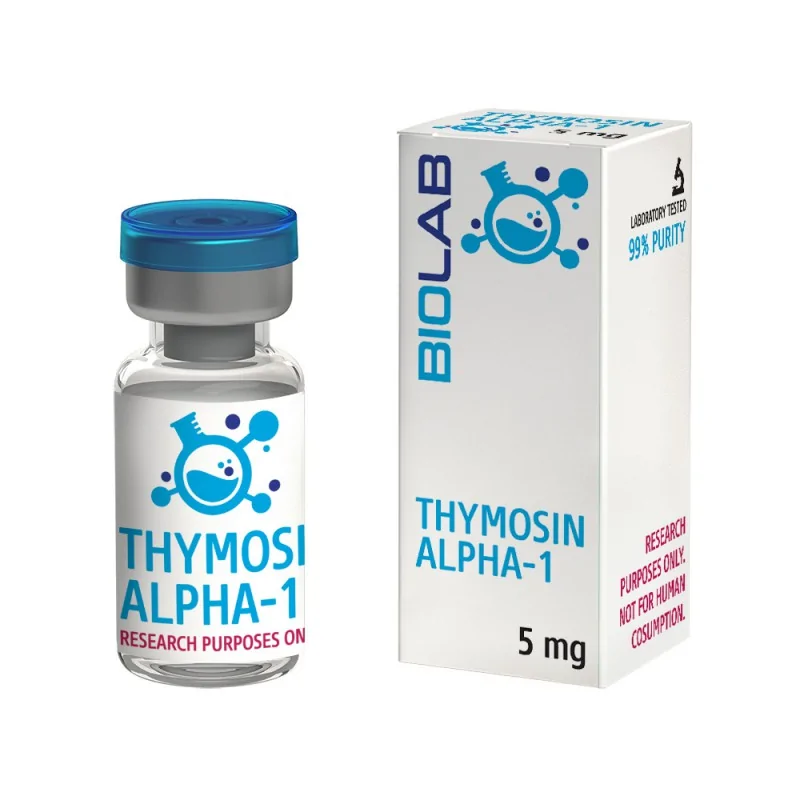
Buy Thymosin Alpha 1 | Thymosin Alpha-1 5 mg
Buy Thymosin Alpha 1, Thymosin Alpha-1 5 mg. A synthetic peptide with potent immunomodulatory qualities, thymosin Alpha-1 (5 mg) is frequently used as an adjuvant treatment for immunological malfunction, cancer, and viral infections. It is a promising treatment for diseases like cancer, COVID-19, and chronic hepatitis since it boosts both innate and adaptive immunity.
- The 28-amino acid peptide known as Thymosin Alpha-1 (Tα1) was first identified in thymic tissue.
- In more than 35 countries, it is sold pharmaceutically as Zadaxin for the treatment of chronic hepatitis B and as an immune booster.
- Tα1 is a real immune modulator that balances both hyperactive and underactive immunological responses, in contrast to simple immune stimulants.
Buy Thymosin Alpha 1 | Mechanism of Action
- Immune cell activation: Promotes the development of NK cells, dendritic cells, and T cells (CD4+, CD8+).
- Toll-like Receptor (TLR) Engagement: Increases the production of cytokines (IL-2, IFN-α, and IFN-γ) via activating TLR2/3/4/7/9 pathways.
- Restores Immune Competence: Boosts innate immune surveillance, enhances antigen presentation, and reverses T-cell fatigue.
Buy Thymosin Alpha 1 | Clinical Uses
- Viral Infections: Used in HIV experiments and demonstrated to lower mortality in severe COVID-19 cases; approved for chronic HBV/HCV.
- Cancer Therapy: Increases survival and boosts the effectiveness of checkpoint inhibitors in non-small cell lung cancer (NSCLC) and hepatocellular carcinoma (HCC).
- Meta-analyses of sepsis indicate better immunological markers and decreased mortality.
- Immunodeficiency & Vaccines: Enhances vaccination responses in immunocompromised individuals and reinstates immunological function in people who have been suppressed by chemotherapy or aging.
Administration & Dosage
- Usually, 5 mL of bacteriostatic water is used to reconstitute a 5 mg vial, resulting in a concentration of 1 mg/mL.
- 900 µg (90 units) twice a week for 12 weeks is the standard dosage.
- Alternative Research Dosage: 1.6 mg twice a week in HIV or cancer protocols.
- Administration: Subcutaneous injection (upper arm, thigh, or abdomen).
- Cycle Protocols: Usually 12 weeks on and 4 weeks off, followed by a reevaluation of immunological markers.
Profile of Safety
- Comprehensive Clinical Data: Used pharmaceutically for decades and examined in Phase III trials involving more than 4,400 people.
- Well Tolerated: No significant safety signals throughout long-term use; adverse event rates are similar to those of a placebo.
- No Tumorigenesis or Autoimmunity Evidence: Safe even in populations with severe infections and cancer.
Comparison: Kisspeptin-10 vs Thymosin Alpha-1
| Feature | Kisspeptin-10 (5 mg) | Thymosin Alpha-1 (5 mg) |
|---|---|---|
| Primary Role | Reproductive hormone regulation | Immune modulation |
| Mechanism | Stimulates GnRH → LH/FSH | Enhances T-cell, NK cell, cytokine activity |
| Clinical Focus | Fertility, hypogonadism, IVF | Viral infections, cancer, sepsis |
| Administration | Subcutaneous, fertility protocols | Subcutaneous, immune cycles |
| Safety Profile | Favorable, limited trials | Extensive clinical data, well tolerated |
In conclusion
A clinically proven immune peptide, thymosin Alpha-1 (5 mg) has a wide range of uses in immunological failure, cancer, and viral infections. It differs from basic stimulants in that it can normalize immunological responses, and long-term therapeutic use is supported by its excellent safety record.
Be the first to review “Thymosin alpha-1 5 mg”
Related products
Buy Peptides Online
Buy Peptides Online
Buy Peptides Online
Buy Peptides Online
Buy Peptides Online
Buy Peptides Online
Buy Peptides Online
Buy Peptides Online
Reviews
There are no reviews yet.