
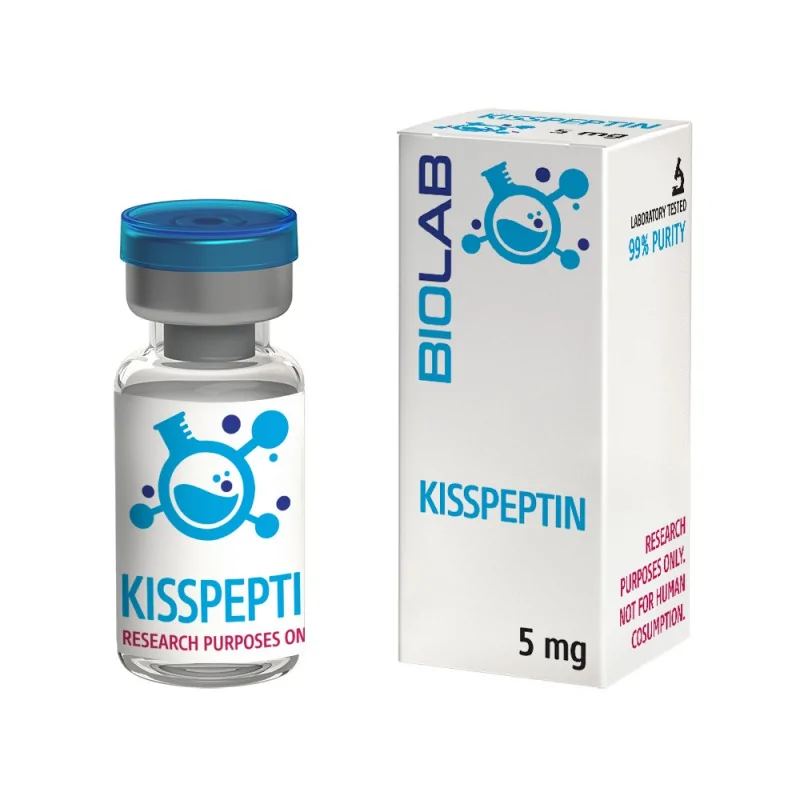
Kisspeptin 10 | Kisspeptin-10 5 mg
Kisspeptin 10, Kisspeptin-10 5 mg. A synthetic peptide called kisspeptin-10 (5 mg) stimulates the hypothalamic-pituitary-gonadal (HPG) axis, which is crucial for controlling reproductive hormones. With promising uses for both men and women, it is extensively researched for its potential in hormone regulation, metabolic health, and fertility treatments.
- The KISS1 gene encodes the active portion of the broader Kisspeptin peptide family, known as Kisspeptin-10.
- Gonadotropin-releasing hormone (GnRH) is released when it attaches to the KISS1R (GPR54) receptor on GnRH neurons in the hypothalamus.
- Luteinizing hormone (LH) and follicle-stimulating hormone (FSH), which are necessary for the creation of testosterone in men and the regulation of estrogen and progesterone in women, are secreted by the pituitary gland as a result of this cascade.
Kisspeptin 10 | Important Physiological Functions
- Puberty and Fertility: The onset of puberty, menstrual cycles, ovulation, and sperm production all depend on kisspeptin.
- IVF Applications: Research indicates that kisspeptin, as opposed to hCG, can induce oocyte maturation with a reduced risk of ovarian hyperstimulation syndrome.
- Treatment for Hypogonadism: It is being researched to restore reproductive function in situations of delayed puberty or hypothalamic amenorrhea.
- Metabolic Effects: Kisspeptin receptors are present in the pancreas, liver, and adipose tissue, indicating functions in insulin secretion, glucose regulation, and energy balancing.
Kisspeptin 10 | Administration & Dosage
- Kisspeptin-10 normally comprises 5000 mcg in a 5 mg vial.
- The dosage can be changed for subcutaneous injections when diluted with bacteriostatic water.
- Depending on the protocol, typical clinical dosages vary from 50 to 100 mcg each injection.
- Effects on LH and testosterone are often observed within hours to days after subcutaneous administration, frequently in the abdominal region.
Benefits Compared to GnRH Analogs
- Natural Pulsatility: Kisspeptin maintains the body’s natural pulsatile hormone production, in contrast to direct GnRH agonists.
- Decreased Risk of Desensitization: Kisspeptin prevents the desensitization of receptors caused by continuous use of GnRH agonists.
- Wider Uses: Kisspeptin exhibits potential in sexual behavior, metabolic control, and possibly bone health in addition to fertility.
Outlook for Safety and Research
- According to clinical research, Kisspeptin-10 appears to have a good safety profile with few side effects.
- Its application in functional hypogonadism, polycystic ovarian syndrome (PCOS), and hypothalamic diseases is being investigated.
- To improve therapeutic potential and overcome its short half-life, longer-acting analogs are being developed.
In conclusion
A novel peptide treatment with great promise for metabolic health and reproductive medicine is kisspeptin10(5 mg). It is a prospective substitute for conventional reproductive medications due to its capacity to naturally stimulate the HPG axis, and research is still being done to increase its potential uses. Its clinical momentum indicates that it may soon play a crucial role in addressing metabolic diseases, hormone abnormalities, and infertility, even if it is not currently a widely used medication.
Be the first to review “Kisspeptin-10 5 mg”
Related products
Buy Peptides Online
Buy Peptides Online
Buy Peptides Online
Buy Peptides Online
Buy Peptides Online
Buy Peptides Online
Buy Peptides Online
Buy Peptides Online
Reviews
There are no reviews yet.