
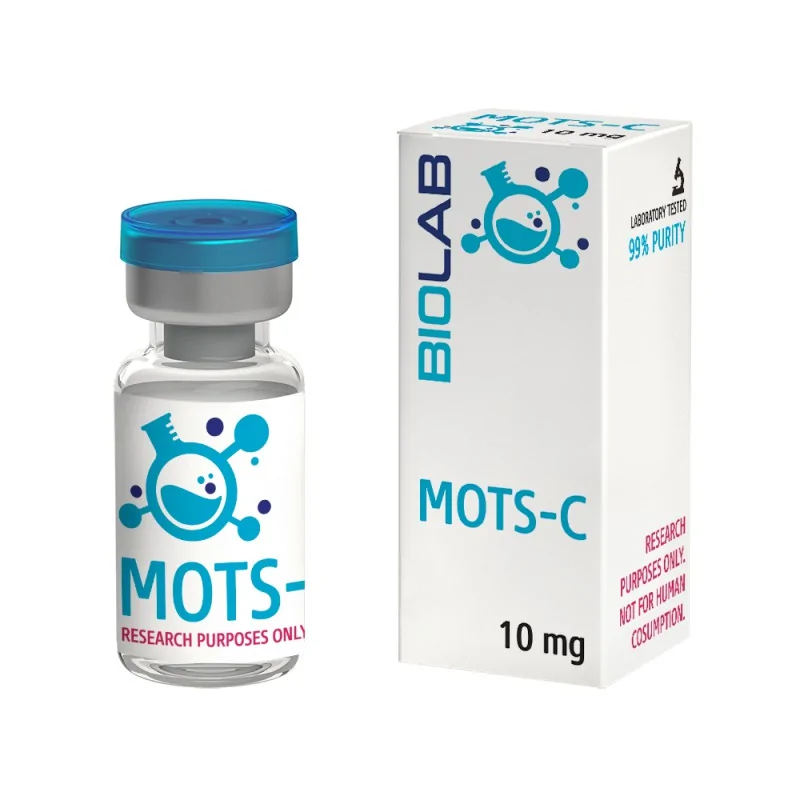
Mots-c Peptide Uk | Mots-C 10mg
Mots-c Peptide Uk, Mots-C 10mg. The mitochondrial 12S rRNA gene encodes MOTS-c (10 mg), a 16 amino acid peptide produced from mitochondria. It is an interesting candidate for research into metabolic diseases, obesity, and age-related decline because of its critical function in controlling metabolism, stress responses, and aging.
- Mitochondrial ORF of the 12S rRNA Type-C is referred to as MOTS-c.
- Unlike the majority of peptides encoded in the nuclear genome, it is a bioactive peptide generated by mitochondria.
- MOTS-c is a signaling molecule that affects cellular metabolism and stress tolerance. It is 16 amino acids long.
Mots-c Peptide Uk | Characteristics
- Origin: Encoded within the mitochondrial genome (12S rRNA region).
- Size: Small peptide (16 amino acids).
- Distribution: Found in skeletal muscle, circulation, and other tissues.
- Function: Modifies nuclear gene expression to control metabolic balance.
- Administration in research: Examined in injectable form; frequently used in 10 mg vials for testing.
Mots-c Peptide Uk | Impacts
- Metabolic Regulation: Improves insulin sensitivity and glucose utilization.
- Fat Metabolism: Reduces the buildup of fat by encouraging the oxidation of fatty acids.
- Stress Response: Assists cells in adjusting to oxidative and metabolic stress.
- Exercise Mimetic: Activates AMPK pathways to mimic some of the advantages of physical activity.
- Anti-Aging Potential: Prevents age-related metabolic decline and promotes mitochondrial activity.
- Neuroprotection: Preliminary research points to defenses against neurodegenerative processes.
Advantages
- Enhanced Insulin Sensitivity: Possible treatment for metabolic syndrome and type 2 diabetes.
- Weight management: Promotes the retention of lean muscle and the reduction of fat.
- Enhanced Energy Production: Increases the effectiveness of mitochondria.
- Longevity Research: Examined for its potential to postpone the age-related deterioration of metabolic health.
- Cardiovascular Support: By enhancing lipid metabolism, it may lower heart disease risk factors.
- Exercise Enhancement: By imitating exercise-induced pathways, it may increase recovery and endurance.
Comparison: MOTS-c vs. CJC-1295 with DAC
| Feature | MOTS-c (10 mg) | CJC-1295 + DAC (10 mg) |
|---|---|---|
| Origin | Mitochondrial peptide | Synthetic GHRH analog |
| Length | 16 amino acids | 29 amino acids (modified) |
| Primary Role | Metabolic regulation, stress adaptation | Stimulates GH release |
| Half-Life | Short (hours) | Long (6–8 days) |
| Main Effects | Improves insulin sensitivity, fat metabolism, anti-aging | Increases GH & IGF-1, muscle growth, fat loss |
| Research Focus | Diabetes, obesity, aging | Growth hormone deficiency, muscle wasting, anti-aging |
| Status | Preclinical/experimental | Investigational peptide |
Synopsis
MOTS-c 10 mg is a peptide generated from mitochondria that improves insulin sensitivity, controls metabolism, and has potential in studies on metabolic diseases and anti-aging. MOTS-c optimizes energy use and stress responses at the cellular level, in contrast to CJC-1295 with DAC, which mainly increases growth hormone release. Both substances are still under investigation, but MOTS-c is especially intriguing due to its potential in studies on diabetes, obesity, and longevity.
Be the first to review “MOTS-C 10 mg”
Related products

Buy Peptides Online

Buy Peptides Online

Buy Peptides Online

Buy Peptides Online

Buy Peptides Online

Buy Peptides Online

Buy Peptides Online

Buy Peptides Online
Reviews
There are no reviews yet.